Why the Body Fails to Fully Recover After COVID-19 or Vaccination
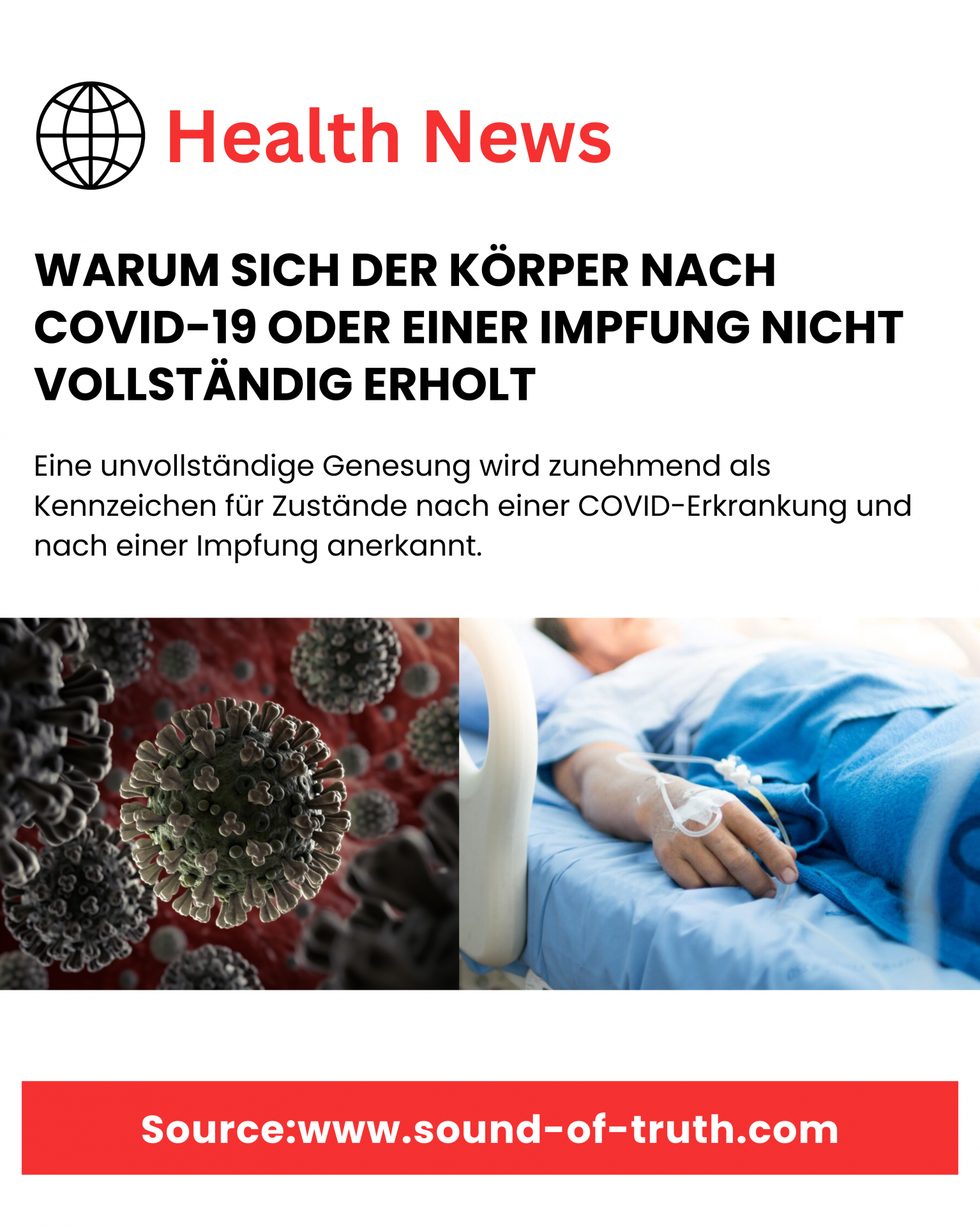
For many individuals, the problem is not the severity of the initial infection or vaccination reaction, but the body’s inability to complete the recovery process. Instead of returning to a stable physiological baseline, symptoms linger, fluctuate, or gradually expand across different systems.
This incomplete recovery is increasingly recognized as a hallmark of post-COVID and post-vaccination conditions. Patients often describe a pattern where the body appears stuck in a prolonged stress or inflammatory state, unable to reset.
Common indicators of stalled recovery include:
● Persistent exhaustion despite adequate rest
● Worsening symptoms after mild physical or mental effort
● Heightened sensitivity to stress, temperature, or sensory input
● Recurrent infections or prolonged healing times
These patterns suggest a disruption of fundamental regulatory mechanisms rather than isolated organ damage.
Systemic dysregulation instead of isolated symptoms
Current research increasingly frames long COVID and post-vaccination syndromes as conditions of systemic dysregulation. Rather than affecting a single organ, multiple control systems appear to be involved simultaneously.
Key systems under investigation include:
● Immune regulation and chronic low-grade inflammation
● Autonomic nervous system imbalance
● Endothelial and microvascular dysfunction
● Mitochondrial energy production
When these systems fail to synchronize, the body may remain in a constant state of physiological alert, draining energy reserves and impairing cellular repair processes.
Why standard tests often fail to detect the problem
A major challenge for affected individuals is that standard medical tests frequently return “normal” results. Imaging, blood work, and organ-specific exams may not capture subtle functional impairments at the microcirculatory, cellular, or autonomic level.
This disconnect between patient experience and measurable findings often leads to delayed diagnosis or misinterpretation of symptoms. However, absence of conventional abnormalities does not equate to absence of disease.
Advanced research methods are now focusing on:
● Functional vascular testing
● Immune profiling
● Autonomic function assessment
● Metabolic and mitochondrial markers
These approaches aim to detect disturbances that are invisible to routine diagnostics.
The overlap between post-infectious and post-vaccination responses
The growing overlap between long COVID and post-vaccination symptoms suggests a shared biological pathway in a subset of individuals. Both conditions appear capable of triggering prolonged immune activation, autoantibody formation, or neurovascular instability.
This does not imply that vaccination is broadly harmful, but rather that rare, individual immune responses may fail to resolve properly after immune stimulation—whether from infection or vaccination.
Understanding why these responses persist in some individuals remains one of the central open questions in immunology today.
Rethinking treatment: from suppression to stabilization
Because these conditions involve regulatory dysfunction rather than acute damage, treatment strategies are gradually shifting. Instead of aggressive symptom suppression, many clinicians emphasize stabilization, pacing, and careful modulation of immune and nervous system activity.
Patients often benefit most from approaches that:
● Prevent post-exertional crashes
● Support autonomic balance
● Reduce inflammatory overload
● Encourage gradual, non-linear recovery
This reframing moves the focus from “pushing through” symptoms to working within the body’s reduced tolerance window.
Toward a more coherent medical framework
Long COVID and post-vaccination syndromes are forcing medicine to confront long-neglected questions about post-infectious illness, immune memory, and recovery biology. They challenge the assumption that absence of acute disease equals health.
A coherent framework must integrate immunology, neurology, vascular biology, and patient-reported outcomes—acknowledging that recovery is an active biological process, not a passive one.
https://www.sound-of-truth.com/de/shop/buecher/dirk-seeling/long-covid-modrna-impfnebenwirkungen/1/