About the Author – H.H. Swami Isa
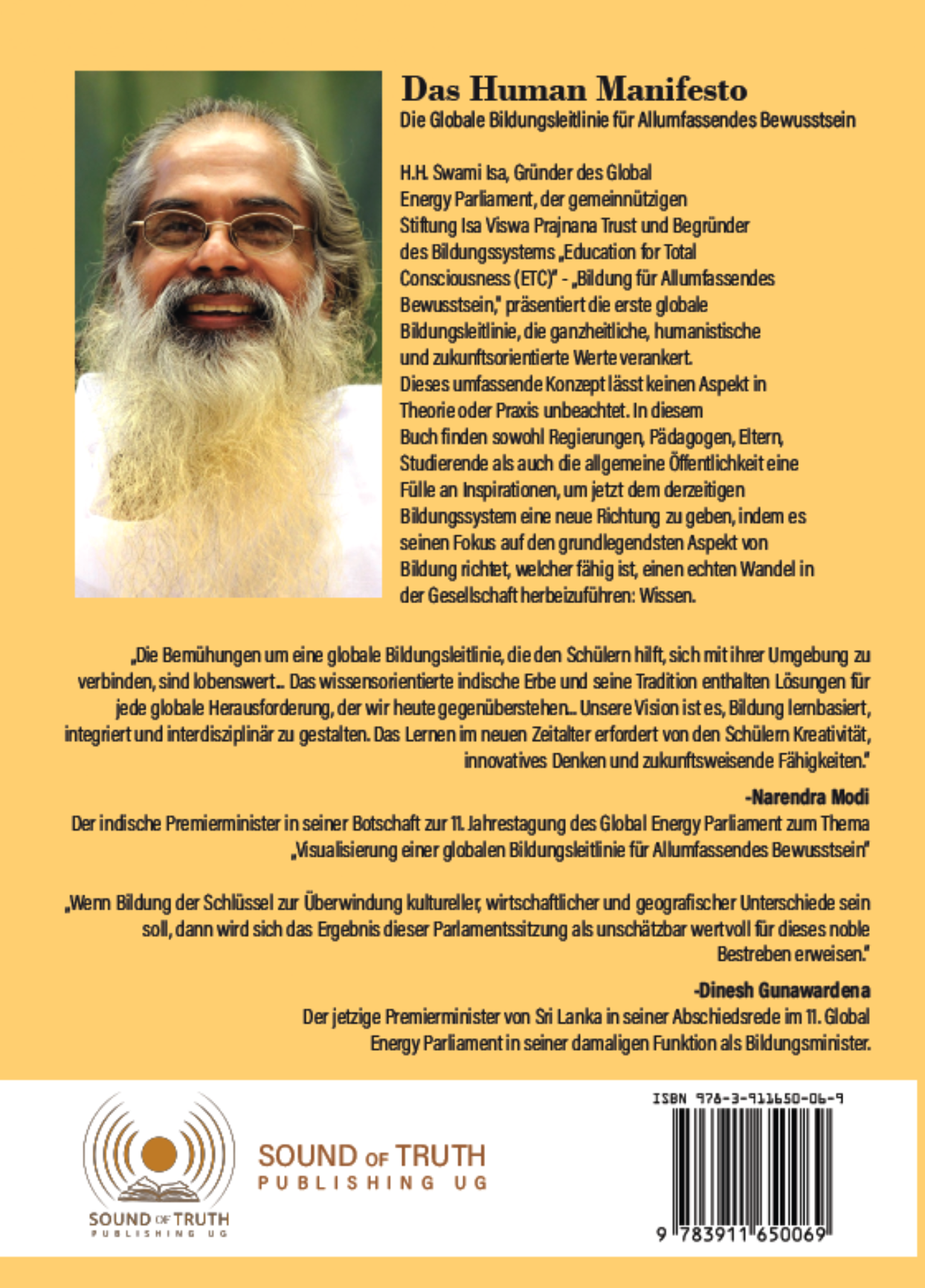
H.H. Swami Isa is the founder of the pilot school Isa Viswa Vidyalayam, which has been operating successfully for over 20 years in the spirit of this educational guideline. He is a globally respected philosopher, scientist, and educator known for his profound teachings on human development, inner transformation, and global well-being. He is the founder of the Isa Viswa Prajnana Trust (IVPT) (with ECOSOC status at the United Nations) and the Global Energy Parliament, organizations dedicated to education, peace, and sustainable living. With decades of experience in guiding people to a deeper understanding of consciousness and the interconnectedness of life, Swami Isa has authored numerous works that combine ancient wisdom with practical insights for modern life. His teachings emphasize thoughts as the creators of all things in our world. Self-knowledge, compassion, and harmony are essential paths to personal and collective transformation for humanity into a human future in balance with each other and with all life on our planet and in the universe. To implement his ideas, Swami Isa founded the non-profit Isa Viswa Prajnana Trust (IVPT), the Isa Viswa Vidyalayam School, the Global Energy Parliament (GEP), the GEP Research Center, and the Isalayam Ashram.
Swami Isa's books—including The Human Manifesto—reflect his unique perspective on the human experience and provide readers with tools to understand themselves and the world more deeply. His work has been disseminated through international conferences, lectures, educational programs, and humanitarian initiatives around the world.
For more information, visit: www.ivpt.org and www.global-energy-parliament.net .
Verlag:Sound of Truth Publishing UG
Buch: Softcover, 148 × 210 mm, 292 Seiten, schwarz/weiß + 8 Farbabbildungen
Sprache: Deutsch
ISBN: 978-3-911650-06-9
FAQ
1. What are the global education guidelines for universal consciousness? ▸
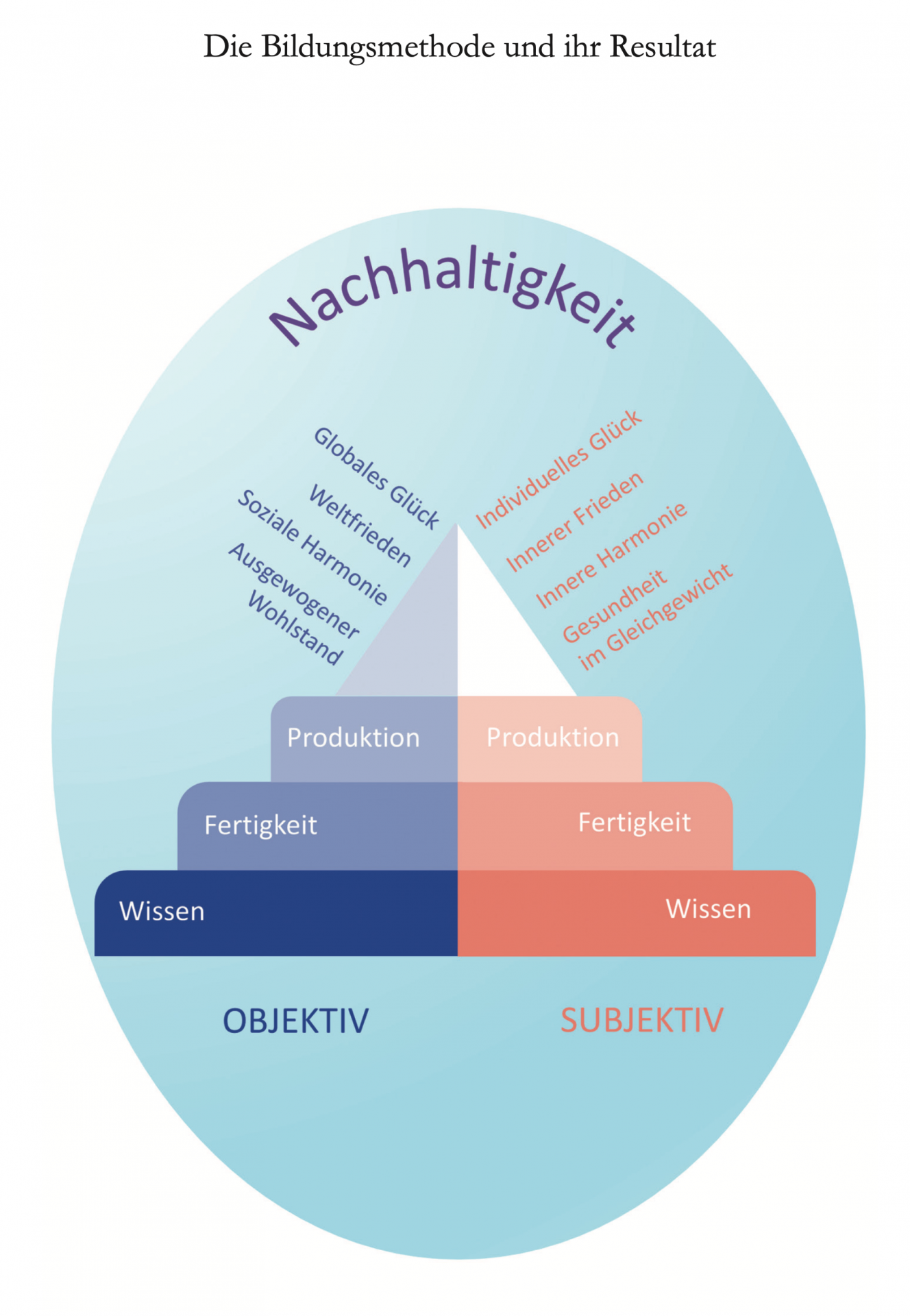
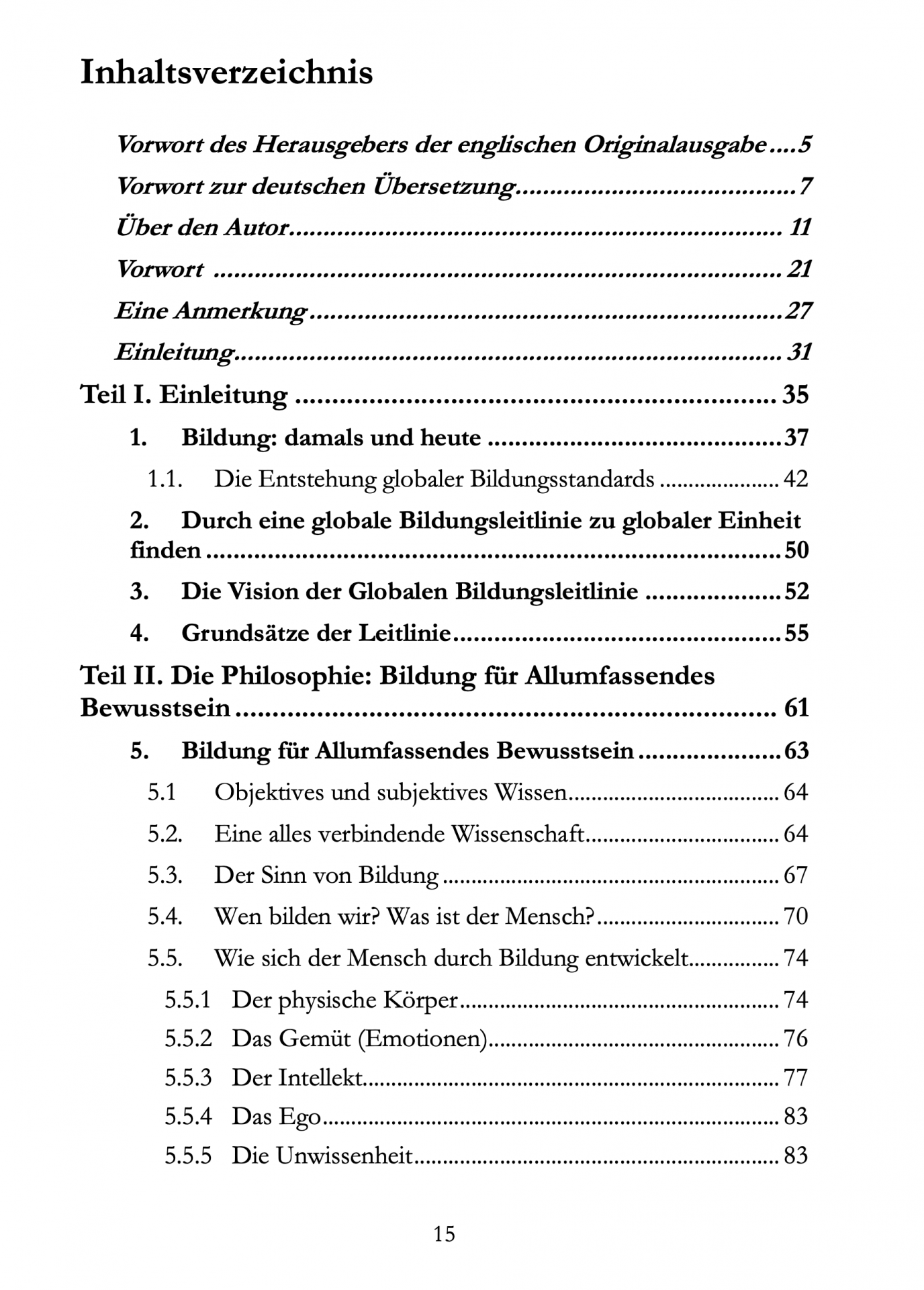
They describe an educational framework that places consciousness, humanity, and ethical development at the center of learning. The guidelines aim to shape education in such a way that it promotes personal growth, social responsibility, and global well-being. Reading, writing, and arithmetic are important cultural techniques that serve a purpose. The classical subjects must be interconnected in order to gain a more holistic view of the real world. Chemistry and biology without knowledge of physics are dangerous half-truths. The same applies to psychology without sociology and civics. Prana science is very important. It explains the life force in all living beings. How does it enter humans, how can each individual fill themselves with it, and why is it dangerous to lose too much of it,leaving one feeling energetically empty? Life is not divided into subjects; rather, water, light, or cells are viewed through the lens of the subjects and form a greater whole.
2. What is the main idea behind Swami Isa's Human Manifesto? ▸
The Human Manifesto assumes that education is the foundation for lasting human happiness and social development. It presents a future-oriented vision for education that combines scientific knowledge with consciousness and human values. It consistently places lasting human happiness through universal consciousness at the center of development, while remaining pragmatic in terms of implementation and integration into existing schools.
3. How does education influence happiness and social development? ▸
According to the book, education shapes the way people think, feel, and act. These patterns influence not only personal well-being, but also the functioning of societies and the development of the global community over time.
4. How does the book “The Human Manifesto” connect education with humanity and ethics? ▸
The book views education not only as a means of imparting knowledge, but also as an instrument for developing empathy, responsibility, and ethical awareness in individuals and societies. Focusing solely on skills leads to a “perfect human being without morals,” if schools and universities were to function. Humanity will only remain human if it incorporates central questions about humanity and the distinction between humans and animals and machines into people's conscious decisions. Ethical thoughts and basic attitudes will determine the future of humanity in this century alone.
5. What makes humans human? ▸
Humans are social and emotional beings with souls and consciences. The destruction of empathy and the automated execution of actions and opinions turns humans into robots. If you want to train humans to perform routines, it makes no sense. Robots can do that better. Humans possess intuition and creativity, which lead to innovative solutions and the right decisions, even when there is insufficient information. Humans can process subtle (smaller than atomic size) information. Robots can do that better. Humans possess intuition and creativity, which lead to innovative solutions and the right decisions, even when there is insufficient information. Humans can process subtle (smaller than atomic size) information and thus make better decisions in the sense of “more appropriate decisions.” If you train people only in cognition and reduce them to their knowledge in their working memory, you diminish their competence and creativity. Human beings are mindful of themselves and others, sense how they are doing, and are interested in their own development toward lasting happiness and the well-being of all other living beings. Humans have the free choice to develop into animals or humans or even divine beings. ETC and the book help education professionals, politicians, parents, and students pave the way for this.