Inflammation After COVID-19 and Post-Vac Syndrome: Possible Mechanisms and Current Findings
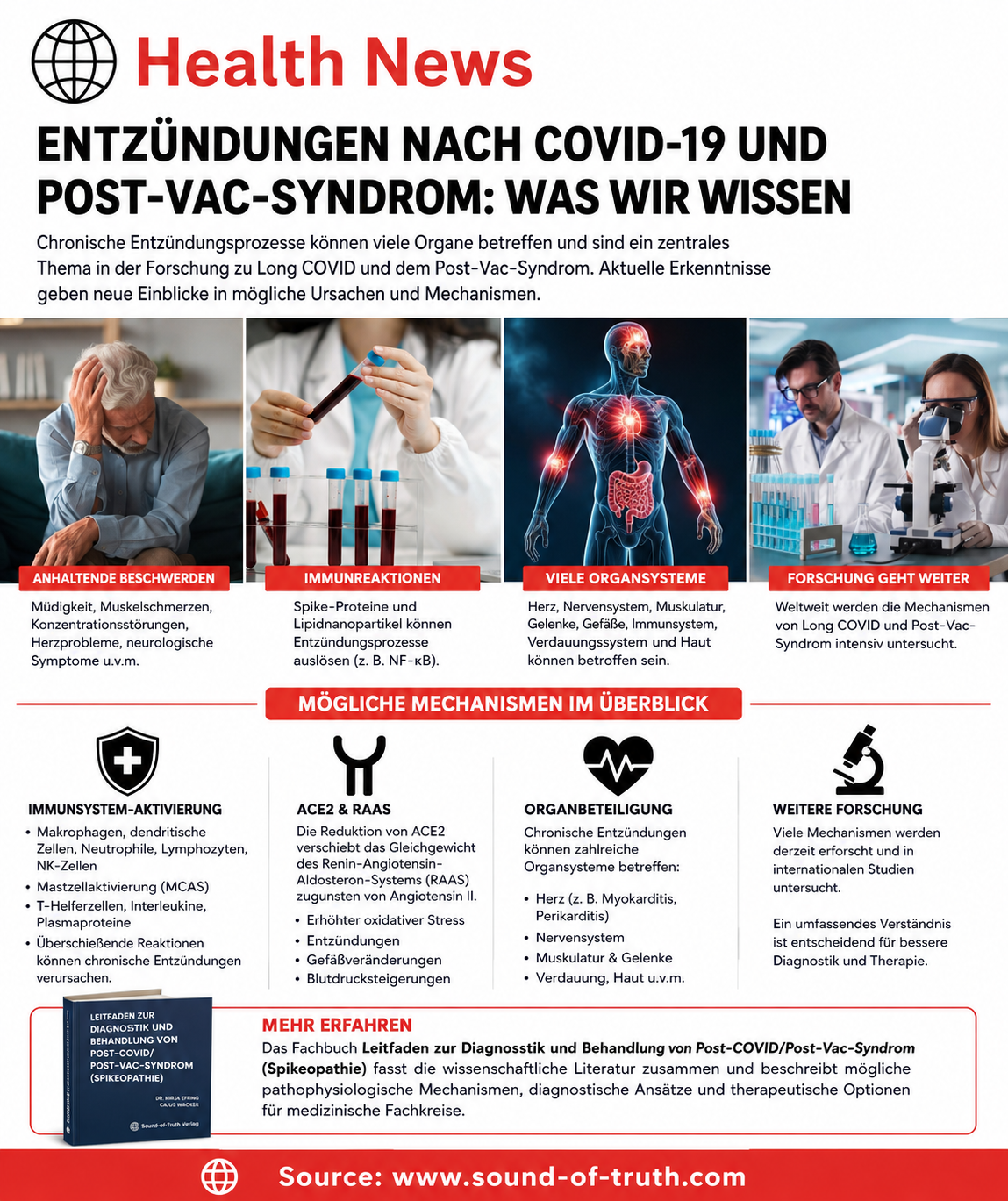
Inflammation in Long COVID and Post-Vac Syndrome – What Is Known So Far?
Chronic inflammatory processes are considered one of the central topics in research on Long COVID and Post-Vac Syndrome. Many affected individuals report persistent complaints such as fatigue, muscle pain, concentration problems, heart problems, neurological symptoms, skin problems (eg eczema), and symptoms in the digestive tract – often months after an infection or vaccination.
But which biological mechanisms could be behind this?
The Immune System as the Key
The immune system responds to viruses and other foreign substances by releasing various messenger substances known as cytokines and chemokines.
Several scientific studies describe that spike proteins as well as lipid nanoparticles can trigger immune responses. Among other things, signaling pathways such as NF-κB are activated, which play an important role in inflammatory processes.
In addition, various immune cells are activated, including:
- Macrophages
- Dendritic cells
- Neutrophil granulocytes
- Lymphocytes, including natural killer cells (NK cells)
- Mast Cell Activation Syndrome (MCAS)
- T helper cells
- Humoral components (plasma proteins)
- Interleukins
These processes are fundamentally part of the immune defense. However, a persistent or excessive inflammatory response can become problematic.
The Manual by Dr. Mirja Effing and Cajus Wacker Gives Doctors and Patients Hope.
A systematic approach developed by a group of approximately 50 doctors who have regularly exchanged information since 2021 was compiled by the physicians Effing and Wacker with professional support from Kurt Müller (founder of environmental medicine in Germany and Europe). The result is the best systematic work for helping with Post Vaccine and Post COVID, published by Sound-of-Truth Publishing. The guide to diagnosis and treatment is structured according to symptoms. However, diagnosis and treatment go deeper into the causes of the illness. The treatment protocols offer practical therapies for spikeopathy that have been shown to be effective in medical practice, which is synonymous with Long COVID, Post COVID, Post Vaccine Syndrome, and vaccination side effects, all of which can present with a wide variety of symptoms.
Let us take Mast Cell Activation Syndrome (MCAS) as an example. It can be ruled out using laboratory parameters included in the treatment guide. However, if it is considered the probable diagnosis, therapy can include, among other measures, mast cell stabilizers, which are also described there. Treatment was often successful when it was individually adapted by an experienced doctor who understands the functional relationships within the complex immune system. Children and young adults were able to walk again after one year of chronic illness. “Almost all of them felt better after the treatments,” said author and physician Cajus Wacker from southern Germany.
ACE2 and the Renin-Angiotensin System
Another mechanism under discussion concerns the ACE2 receptor.
ACE2 normally has anti-inflammatory effects and protects blood vessels as well as various organs.
When ACE2 activity is reduced, the balance of the renin-angiotensin-aldosterone system (RAAS) shifts in favor of angiotensin II.
This may be associated with:
- increased oxidative stress
- inflammatory reactions
- vascular changes
- increases in blood pressure
Chronic Inflammation Can Affect Different Organ Systems
Researchers are currently investigating links between chronic inflammation and complaints in different organs:
- Heart
- Nervous system
- Muscles
- Joints
- Blood vessels
- immune system
- Digestive system
- skin
Myocarditis, pericarditis, and neurological complaints in particular are the focus of current investigations.
Why Further Research Is Necessary
Research on Long COVID and Post-Vac Syndrome continues to develop.
Many of the mechanisms under discussion are being intensively investigated and are the subject of numerous international studies.
For doctors and therapists, a comprehensive understanding of these complex immune responses is essential in order to better diagnose and treat affected individuals.
Learn More
The specialist book
Guide to the Diagnosis and Treatment of Post-COVID/Post-Vac Syndrome (Spikeopathy)
summarizes the scientific literature and describes possible pathophysiological mechanisms, diagnostic approaches, and therapeutic options for medical professionals.